A complete guide to PHA coffee cups: the best alternative to plastic lined paper cups
If you are a cafe owner or a conscious consumer constantly on the hunt for the most eco friendly disposable coffee cup out there in Australia, you are in the right place. Today I’m going to tell you more about what PHA is and what PHA lined coffee cups are all about.
As the latest technology available in the sustainable packaging industry, PHA has the potential to revolutionise the home-compostable coffee cup industry.
After over 12 months of research, testing and trials, this AI-free blogpost is going to cover:
- What is PHA and how are PHA cups made?
- What are PHA lined coffee cups?
- What are the environmental benefits and disadvantages of PHA?
- How are PHA cups different from other eco friendly disposable coffee cups?
- How can you dispose of PHA cups and how long until PHA lined cups become compost?
- Is PHA greenwashing?
- Is PHA the most eco friendly disposable coffee cup on the market?
What is PHA and how are PHA cups made?
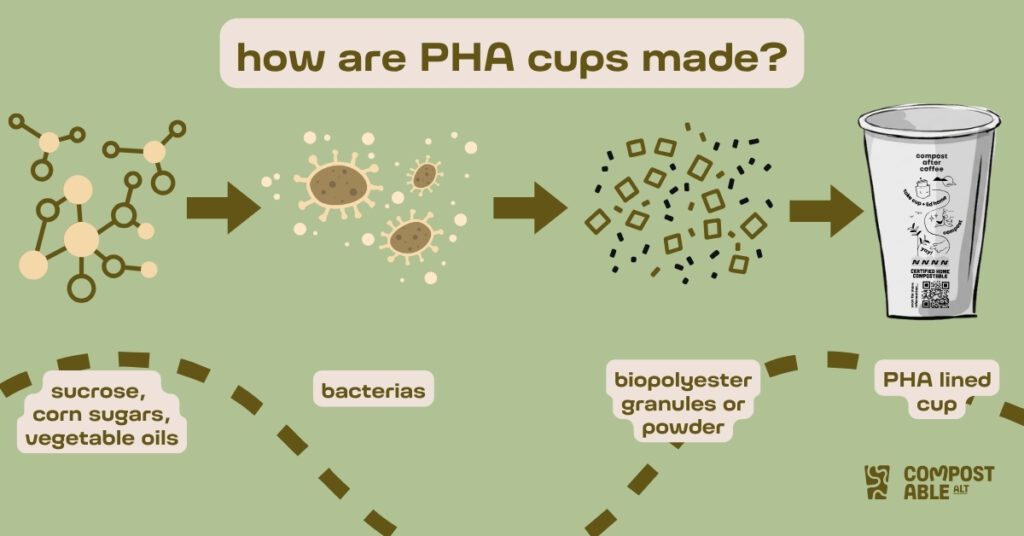
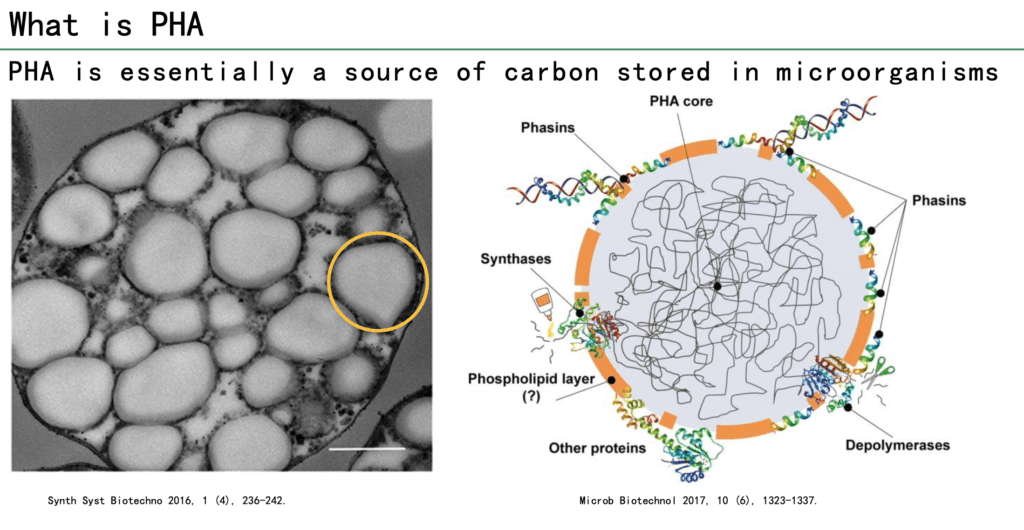
PHA stands for “polyhydroxyalkanoates” and is a bio-based material produced by microorganisms through fermentation. Just like brewing beer or kombucha, it uses renewable resources like sucrose, corn sugars or vegetable oils, through an industrial fermentation process to create biopolyester granules or powder. These granules can be moulded to produce different products, like PHA coffee cup lining.
More recently, the direct cultivation of bacterias from microorganisms has also used to extract PHA, which is how the PHA in our coffee cups is produced. Lipids are extracted from these microorganisms to achieve mass production and maintain consistent quality. This way, it doesn’t compete with feedstock, one of the primary concern when it comes to using natural resources (more on this below).
What are PHA lined coffee cups?
PHA lined coffee cups are paper cups lined with a PHA lining on the inside. It will replace our current aqueous coated paperboard, also certified home compostable.
What are the environmental benefits and disadvantages of PHA?
The environmental benefits of PHA:
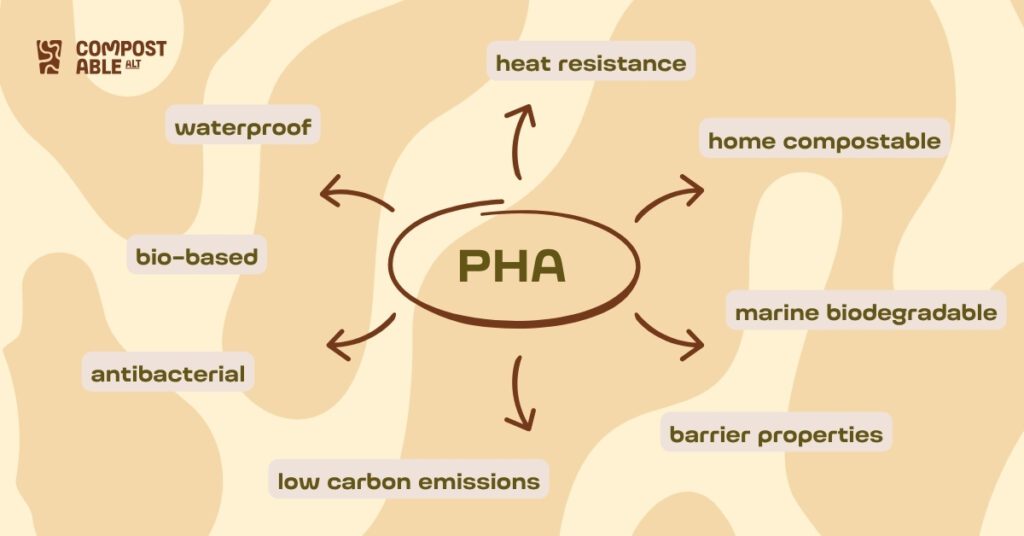
There are many environmental benefits of PHA compared to conventional plastic or other eco friendly materials.
1. Home compostable
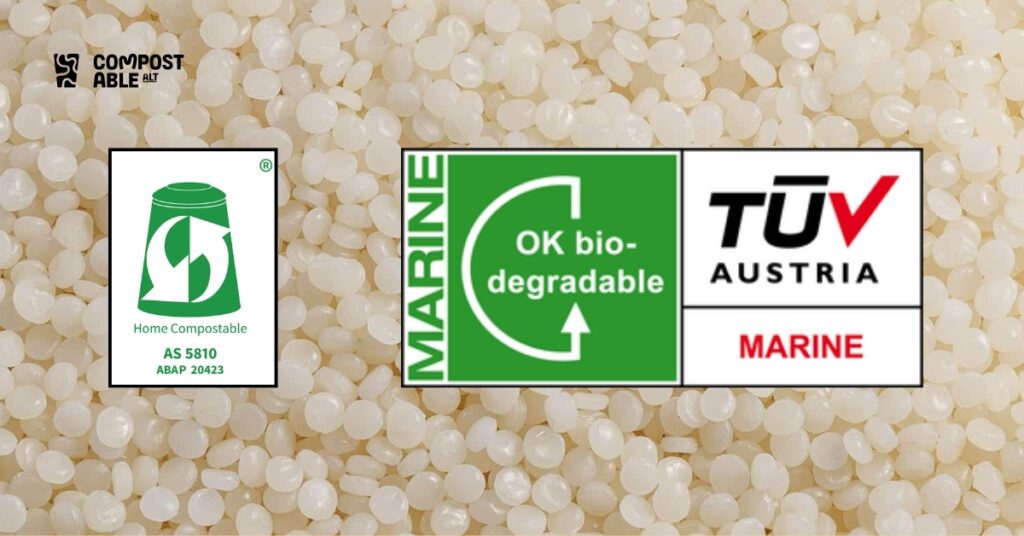
PHA can home composted in a backyard compost or in soil in just a few weeks when in contact with microorganisms, oxygen and moisture. Our PHA lined cups are certified home compostable (AS5810).
2. Marine biodegradable
Unlike other compostable materials available on the market, PHA is certified marine biodegradable which ensures that, in the unfortunate event a cup finds its way into a marine stream, it will break down significantly faster than other plastic and bioplastic cups.
3. Heat resistant and waterproof
PHA has been designed to provide great insulation and replace conventional plastic meaning your coffee will stay hot and leakproof, just like any other paper cups.
4. Made from renewable resources
PHA is manufactured from plant sugars and vegetable oils, meaning it doesn’t contain or rely on any fossil fuel resources.
5. Lower carbon footprint
Biobased materials reduce lifecycle greenhouse gas emissions by 20–70%, with PHA achieving 6.4 kg CO2-eq savings per kg compared to conventional plastic.
6. Non toxic and food safety certified
Our PHA lined cups are food safety certified and safe for the soil, microorganisms and worms.
Disadvantages of PHA
There are little disadvantages to PHA and this is the main reason we are switching all our cups to this technology. However two important elements should be mentioned to have a complete understanding of using a new and innovative technology.
1. The competition for feedstocks for PHA production
As mentioned in this research article “The Role of Bacterial Polyhydroalkanoate (PHA) in a Sustainable Future”, the majority of PHAs are produced from sucrose, sugar corn, and vegetable oils, which compete with the substrates used in the food industry.
To prevent this, researchers are currently trying to use cheaper substrates for PHA production, such as waste feedstocks, lignocellulosic feedstocks, dairy industry waste, oil industry waste, municipal wastes, biodiesel industrial waste, and waste syngas.
Or like the PHA lining used in our coffee cups, cultivating microorganisms and bacterias to achieve mass production and maintain consistent quality.
2. Cost of production
The cost of substrates and research required to produce PHA and the new and innovative nature of the material means it will initially come at a premium price (from 7 to 12% more, on specific sizes only).
As we understand this will not be for everyone, we have proactively changed our designs so our PHA lined cups can be used for hot and iced drinks, meaning less spending overall in packaging costs for our cafe community.
How are PHA cups different from other eco friendly disposable coffee cups?
PHA vs plastic lined cups:
Compared to plastic lined cups representing the majority of disposable coffee cups on the market, PHA cups are certified home compostable, marine biodegradable and made from renewable materials, not finite extractive resources.
PHA vs PLA lined cups:
Compared to PLA lined cups, representing the majority of “compostable cups” sold on the Australian market and that are only compostable in 8% of councils, PHA cups can be composted anywhere: backyard compost, in ground composting, worm farm – and do not require dedicated industrial composting facilities.
PHA vs Aqueous coated cups:
Aqueous coated cups and PHA lined cups are both certified home compostable and safe for the environment. However aqueous coating (or water-based dispersion coating) is not marine biodegradable or made from renewable resources as it contains a small amount of fossil-based synthetic polymers. I wrote an in depth blogpost explaining in detail the 4 different types of disposable coffee cups here.
How can you dispose of PHA cups and how long until they become compost?
PHA lined cups are the easiest type of eco friendly disposable coffee cups, along with aqueous coated cups. As they are certified home compostable to the Australian standards AS5810, they feature a range of options when it comes to disposal. I wrote a complete guide on where to start when it comes to composting your coffee cups and here are my top 3 recommendations:
Reuse it first!
Did you know our PHA lined coffee cups could be reused as a planter before they get composted? Simply pop a few holes at the bottom, add a bit of soil, 2-3 seeds and water. You can cover the cup with an upcycled plastic bottle cut in half to create a mini glasshouse. Once you have 8-10cm seedlings, just place the cup in soil – it will naturally compost while you harvest some fresh veggies or flowers!
In a home compost
Whether it’s a backyard compost bin, a composting open bay, a worm farm or an in ground composter – you can easily compost your PHA lined cups there and they will compost in just a few weeks (based on the activity and seasonality of your compost pile). Bonus tips: cut your cup in 4 to 5 pieces to fasten the process.
As part of the official AS5810-2010 standards (currently under review as of April 2026) for home composting,
At least 90% of the material disintegrates into tiny pieces (<2mm) within 6 months in a home compost.
At least 90% of the material biodegrades within 12 months at ambient home composting temperatures (20–30°C).
- more details on the two compostable standards for packaging can be found in this article.
In your FOGO green bin
If your council accept compostable packaging in the green bin along with food and garden waste, simply pop it in the bin. They will go to an industrial composter who uses a set of techniques to break down the material into compost (including aeration, moisture, and heat). Most composters get a finished compost in 4 to 6 weeks based on their setup.
PHA and greenwashing
Greenwashing is very present in the sustainable packaging space and the eco friendly disposable coffee cup industry. Here are my 3 recommendations to prevent greenwashing in your cafe:
Avoid the mention “Plastic-Free”
No single eco friendly disposable coffee cup is “Plastic-Free” in Australia. Even the ones using renewable materials. Technically, a biopolymer is still a plastic even if it doesn’t contain fuel based plastic. Stay away from any supplier promoting a “Plastic-Free” coffee cup, they’re greenwashing you!
Don’t fall for the buzz words and green colours
Green lined cups, or wordings like “made from plant”, “biodegradable”, “compostable” or “eco friendly” are the devil. They make you think you’re doing the right thing when, in reality, they require specific composting facilities to break down, cannot be home composted or have no certifications to back their environmental claims.
Ask more questions
The most common mistake I see is people asking broad questions and therefore getting broad answer. E.g “is it compostable?” instead of “is it certified compostable? What certifications does the product hold? Is it PFAS-free?”
It is very easy for suppliers to navigate their way around broad questions. To be honest, I have spoken to many suppliers at hospitality exhibitions who don’t even have the answers to those questions, proving my below point on the lack of transparency.
Transparency and communication is the best way to know if something is genuine or not. I always let cafe owners know that I’m here to answer any questions. And I always try to be as detailed as possible to make sure everything is 100% clear.
The sustainable packaging space has been opaque for way too long. And when I realised what was going on with “compostable” packaging not being actually compostable – especially eco friendly disposable coffee cups – I couldn’t stay silent any longer. That’s why I launched Compostable Alternatives with my partner Alexis and that’s why we support strictly certified home compostable products since we started (and nothing else).
Is PHA the most eco friendly disposable coffee cup on the market?
To date PHA is the most advanced, innovative and commercially available technology when it comes to eco friendly disposable coffee cups. We are extremely proud to give our cafe partners the opportunity to be the first to onboard such progressive technology in this space and lead with responsible practices in their local community. It has taken us over 12 months of testing, certification and a massive investment to bring this product to the market.
As of May 2026, all our 90mm range and 80mm slim range coffee cups use a PHA lining.
We’re proud to be the first Aussie packaging brand offering strictly PHA lined cups with more innovative products to come!

About the author:
Marion is a French Australian entrepreneur, profoundly interested in the composting industry. Her words are her own thoughts and come from her research and learning. Although she quotes and sources the information she shares, Marion is not a scientist or a researcher and her opinions should not be understood as a scientific truth.
Through her findings and experience in the industry, she is attempting to support hospitality businesses and producers in their search of alternative choices to single-use and other types of plastic packaging. You should always do your own research to best inform yourself.
Share this article :