
How to: Guide Fibre Lids
The application method is a little different from plastic lids. Follow these steps for a smooth changeover for you and your team.
To clip the lid on:
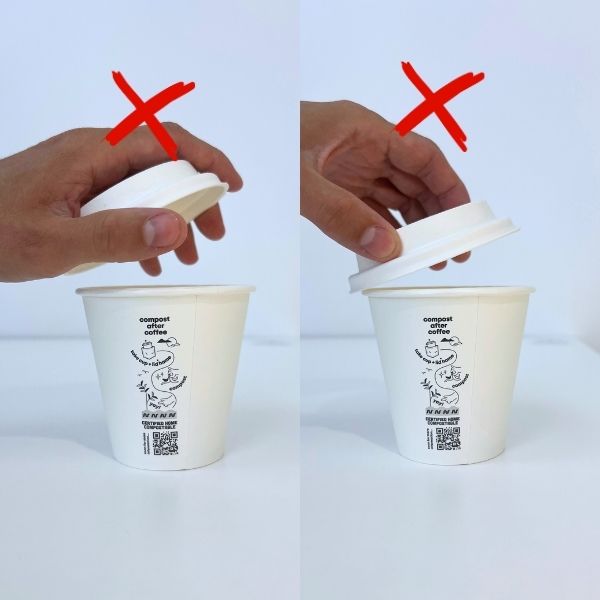
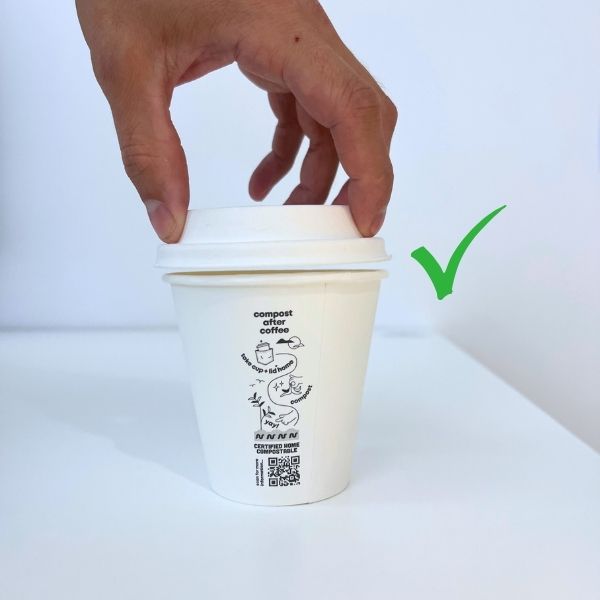
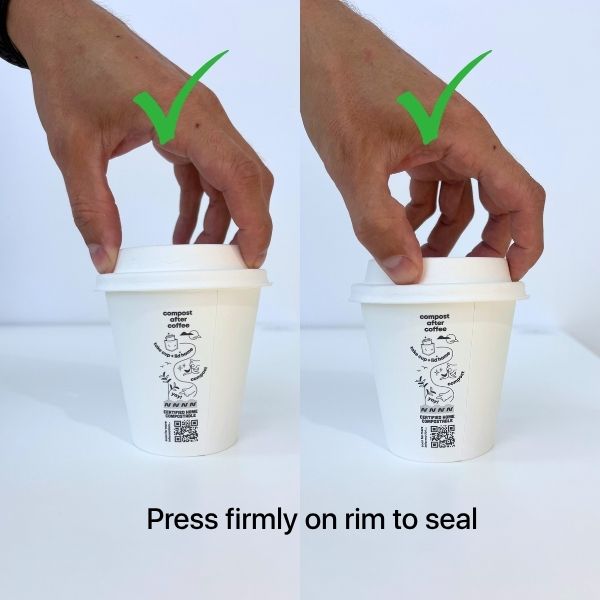
- Press down from the top with your hands on the side of the lid
- Don’t squeeze from one side to another like you would with a plastic lid.
- Press gently, 2–3 times, at different points around the rim, until it clips into place.
- It may clip on the first press.
- Don’t squish the sides of the cup so the lid stays tight
Storage Guide
Store cups and lids away from direct sunlight and humidity. Avoid storing them on top of the coffee machine – heat and steam can expand the fibres, which may stop the cup and lid fitting together properly.
Disposal Guide
Cups and lids: compost
- Material: cup = paper and PHA; lid = paper and bagasse
- Reuse ideas: planter, seed starter, craft projects, paint cup, kids’ activities (STEAM), shredded chicken bedding
- Disposal, in order of preference:
- Home compost, as a carbon material
- Council/commercial compost: only where the council explicitly accepts compostable packaging (not just food scraps, see note below)
- If neither is available, general waste
NSW cafes: read before telling customers to use the green bin. NSW excludes all compostable packaging, certified or not, from residential FOGO/green bin collections – it’s a blanket ban, not certification-dependent.
Paper sleeves: recycling or compost
- Material: paper
- Reuse ideas: crushed for parcel void-fill, shredded for chicken bedding
- Disposal: paper recycling, or home compost as a carbon material
Box: recycling
- Material: cardboard
- Reuse ideas: parcels, craft projects, garden weed control or waste sorting
- Disposal: cardboard recycling
Plastic sleeves (AU-made cups, 80mm fibre lids, flat and dome fibre cold lids)
- Material: Low Density Polyethylene (LDPE), plastic #4
- Reuse ideas: parcel void-fill
- Disposal: soft plastic drop-off recycling where available – not your kerbside/commingled recycling bin. Otherwise, general waste.
Composting resources
As of June 2025, 276 councils (51%) provide an organic collection service including:
- 200 councils with FOGO. However, only 43 (21%) accept compostable packaging in their residential compost collections.
- 74 councils with GO
- 1 council with FO
- 1 council with FOGO or none
Unfortunately, 260 councils don’t provide organic bins to their residents (source: DCCEEW Government website)
Search your council on this page to check two separate things:
- whether they collect Food Organics (FO), Garden Organics (GO), or Food Organics and Garden Organics (FOGO);
- and, separately, whether they accept compostable packaging in that collection. Having a FOGO bin doesn’t automatically mean packaging is accepted in it; a lot of councils only want food scraps and garden waste.
For the most up-to-date information, it’s recommended to check directly with your local council to confirm which bins are provided in your area and what materials are accepted in each.
Marketing resources
Create authentic content online:
- Take photos of the cups in your cafe environment.
- Tell your story: why did you switch, and why does it matter to you and your community?
- Talk about the other sustainability initiatives in your business.
- Reach out to us for a collaborative post.
Examples:
- https://www.instagram.com/p/C882ho8SzYK/
- https://www.instagram.com/p/C7-wJGJvkui/
- Video example: https://www.instagram.com/reel/C7DCnvfyYp1/
Key points to use in your own content:
- Cups are certified marine biodegradable (TÜV Austria’s OK Biodegradable MARINE) and home compostable (AS5810).
- You’re one of the first cafes using this cup technology.
- What sets it apart from standard plastic and bioplastic alternatives:
No petroleum-based plastic
No microplastics
No PLA bioplastic
No PFAS (“forever chemicals”) - Clear disposal instructions, to maximise composting instead of landfill
- Lid made of paper and bagasse fibres, also home compostable (AS5810)
Tag us on Instagram: @compostablealt.
Tag us on Facebook: @Compostable Alternatives
Suggested hashtags: #homecompostable #compostaftercoffee #compostablecoffeecup #plasticfreelid
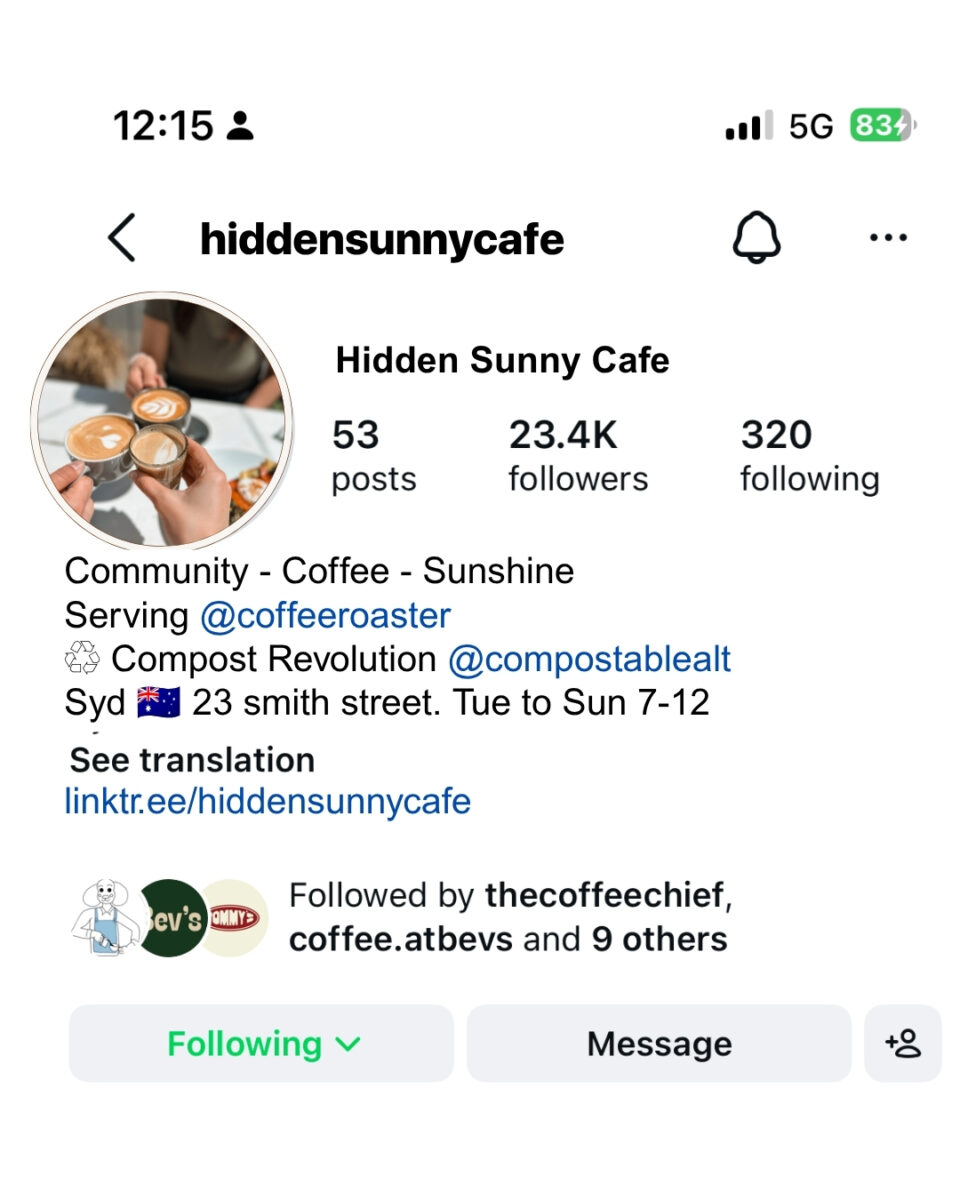
Add @compostablealt to your Instagram bio, and be proud of the steps you’re taking on sustainability.
Use our posters and social media templates:
Check out all our:
- A4 posters to print
- made-for-you Instagram posts, carousels and stories
- free resources for cafes
Register with Responsible Cafes
Join a community of like-minded coffee professionals and get your cafe on the Responsible Cafes map, where thousands of conscious customers look for cafes like yours every month.
- join for free
- search for a Responsible Cafes near you
- check out Responsible Cafes posters and guides (more posters available when you join)
Download our guides to get your team onboard
- 10 Best Secrets to Generate a Cult Following at Your Cafe
- Better Understand Compostable Certifications in Packaging
- Better Understand Compostable vs Biodegradable
Set your bins for success:
- Set up at least 3 bins: organics, recycling and landfill
- print one of our bin sticker and stick it on or above the bin to encourage customers to do the right thing.
- If you can share what happens to your waste once it leaves the cafe, do it.
- Stories about good composting and recycling practice go a long way with customers as they can see how their efforts create a positive impact.
- Don’t let it go unnoticed and post about it on your socials
- see examples and inspos
Behaviour Change Guide
Most people resist change, it’s human nature. Switching away from plastic, which is the only experience most customers have had with takeaway coffee, can feel like a hurdle. But it doesn’t have to be: behaviour change lands better when customers know what’s coming, rather than being caught off guard at the counter.
Be upfront about the switch to plastic-free lids:
- Use our “Our Lids Are Plastic-Free” poster and/or Responsible Cafes’ “Go Topless” poster placed at eye level, somewhere customers will see it when ordering.
- When you call the customer for collection (before putting the lid on), ask: “Do you need a lid with your coffee today, or are you happy to go without?”
- Post about the transition on your own social media (see our templates) so your regulars hear about it and can champion the change.
Share this information with your team using the page url or QR code: