
Better understanding compostable packaging in Australia in 2026

compostable packaging in australia

some important numbers on Compostable packaging in Australia

In Australia, we use 5.4 million tonnes of packaging per year (source: Veolia, 2022-23) where only 11,000 tonnes are certified compostable (source: APCO National Composting Strategy, 2018-19) and 1,500 tonnes are recovered through composting (APCO, 2021. Australian packaging consumption and recycling data 2018-19).

That’s an extremely low recovery rate (approximately 0.027%).

There are two types of compostable products available on the market:

  1. commercially compostable (most common in the “compostable” market)
  2. home compostable

Let’s have a look at the difference:

1. commercially compostable

Commercially compostable products break down into compost ONLY when placed in a dedicated composting facility, using intense heat, humidity, moisture to help microbes develop and break the material down.

According to the Australian Bioplastics Association (ABA),

“a certified commercially compostable product is required to disintegrate after 12 weeks and completely biodegrade after 6 months.”

Commercially compostable products are made of bio-based plastic. In food packaging it often refers to PLA (polylactic acids) extracted from biomass (plants). 

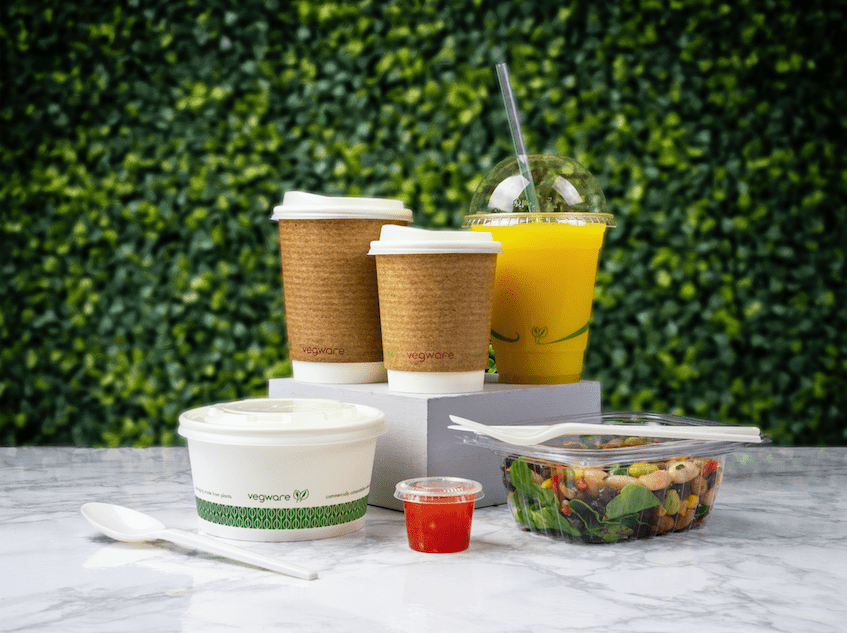
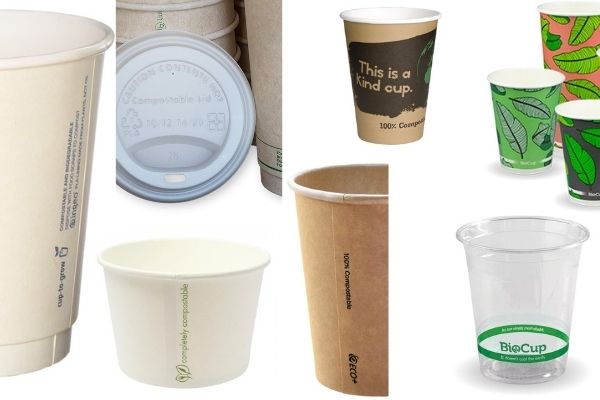
Over the last few years, this type of compostable packaging products have become “the eco-friendly alternative” to traditional plastic packaging in Australia.  You can easily find and purchase compostable coffee cups, clear cups, straws, cling wrap, or food plates and containers from many different packaging companies. 

On the product itself, it often mentions claims like “made from plant, not oil”, “Biocup”, “100% compostable”, “biodegradable” or “I am not a plastic cup”.

At Compostable Alt. we do not support this type of compostable packaging as they’re extremely difficult to compost in the majority of the country, are misleading to consumers and business owners and often end up in landfill, hence the extremely low recovery rate of ~0.027% for compostable packaging that get composted from our research.

You can read more about why we think they are a new source of pollution in our article “Commercial vs Home compostable packaging in Australia: One is still a source of pollution.”  

commercially compostable packaging vegware
commercially compostable packaging

2. home compostable

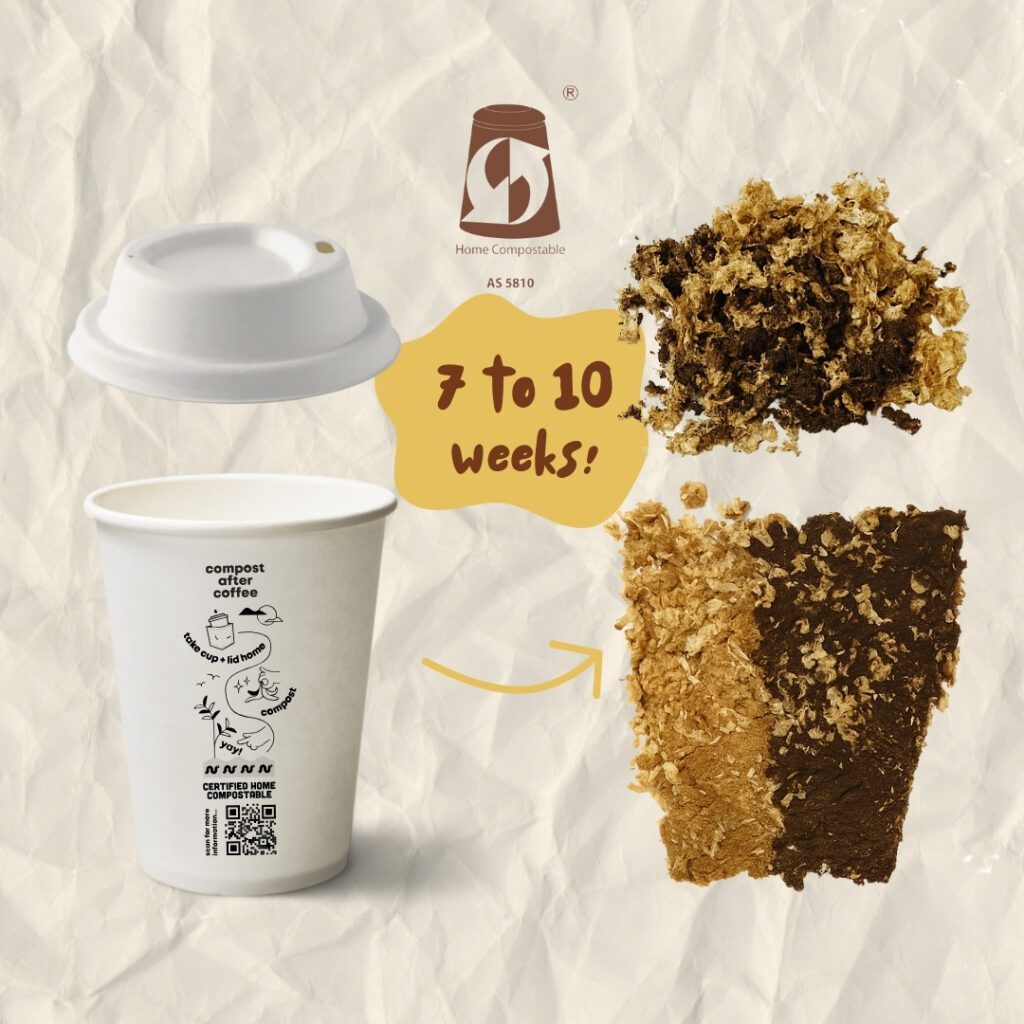
On the other hand, home compostable packaging is much easier to compost and can be composted by anyone around the country.

According to the Australasian Bioplastics Association,

“certified home compostable products need to disintegrate after 180 days and completely biodegrade after 12 months.”

And if composted in a composting facility, it can take as little as 6 weeks for the product to become compost according to the Australian Organics Recycling Association (AORA)

Home compostable products can be:

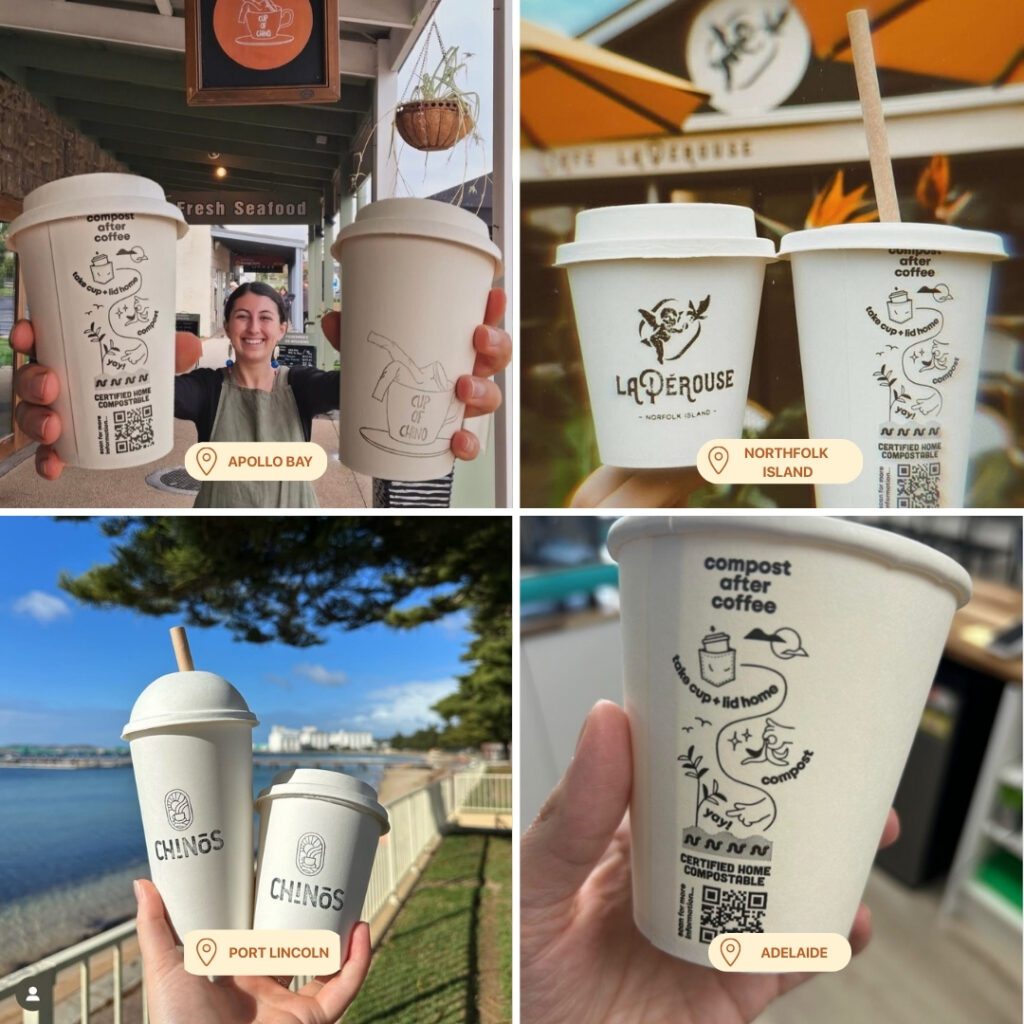
  • transformed products that have been certified home compostable, just like all the products we offer at Compostable Alternatives. 
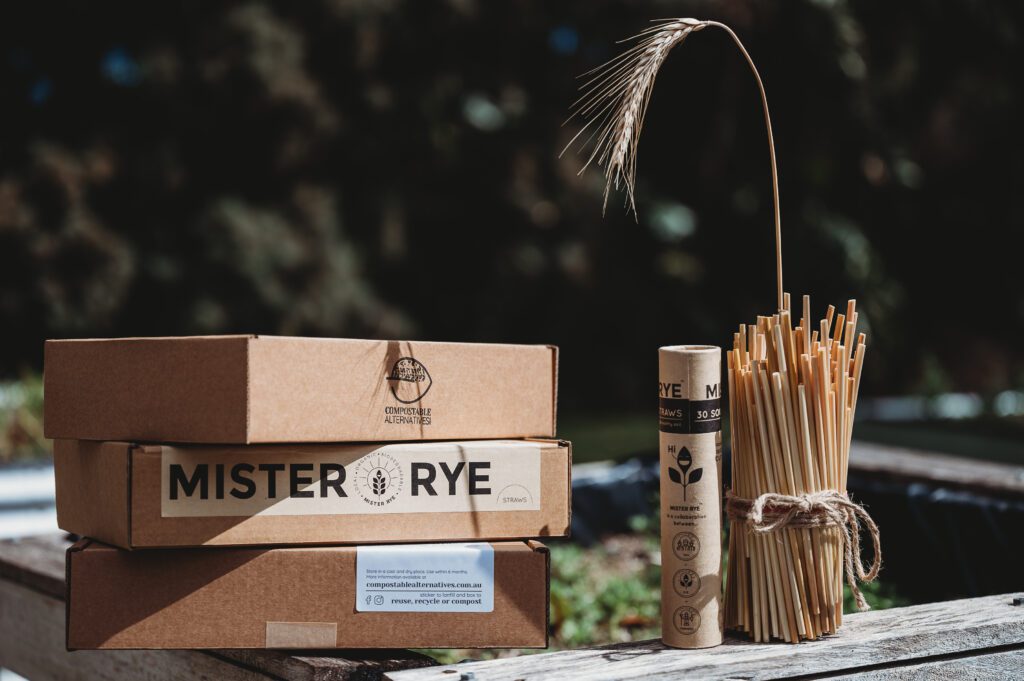
  • raw products like plants with no added materials or transformation. For example, the Mister RYE Australian rye straws we manufactured before launching Compostable Alt. as a by-product of the grain harvest. Another example are Areca leaf plates.
Mister Ryeweb 1
before after 1
UGC1

Composting certification for transformed VS raw products

For raw products, such as natural plant material with no transformation, no composting certifications exist to date. That is why Mister RYE couldn’t certify their Australian rye straws that are simply the stem part of the rye plant for example. 

For transformed products, two certifications exist that ensure a product is home compostable, commercially compostable, or both.  Indeed a certified home compostable product is by default, certified commercially compostable as it holds products to a higher standard for real-world composting.

Certifications are the only way for you, your staff and your customers to distinguish the nature of the material and understand how to properly dispose of it.  

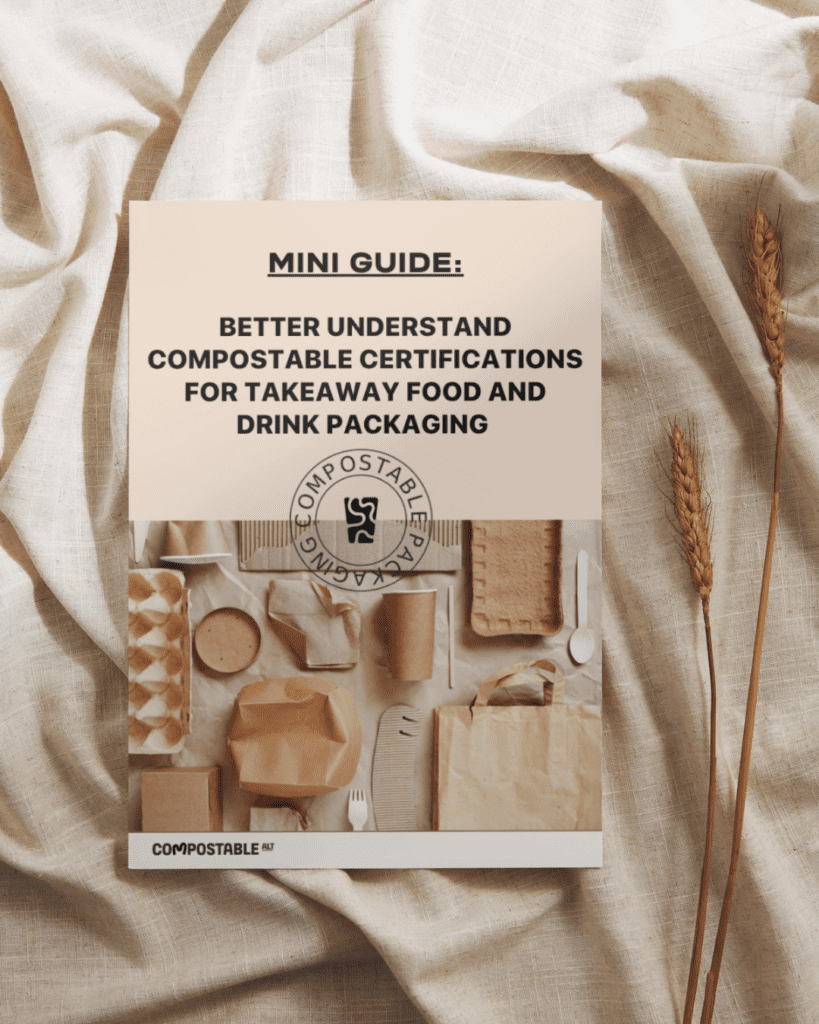
Download our free guide to better understand Compostable Certifications for Takeaway Food and Drink Packaging below.

Mini Guide Composting Certification Packaging preview1

Where to dispose of these two types of compostable products

Certified commercially compostable products can only go in dedicated green FOGO bin (Food Organics Garden Organics) accepting compostable packaging. This is the only way they will be processed into compost via a composting facility.

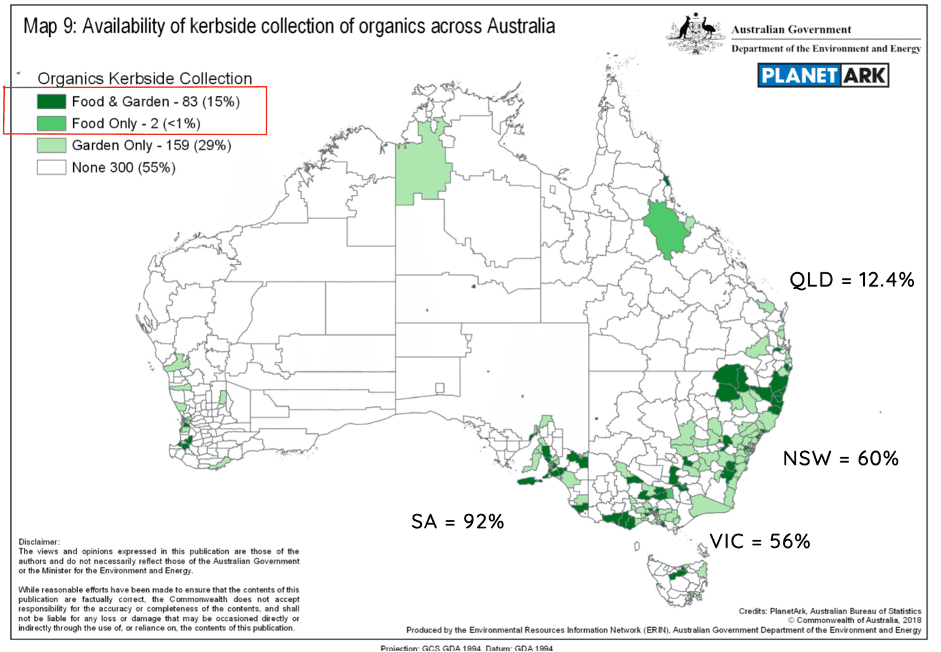
In 2025, only 43 out of the 536 councils were accepting compostable packaging in the green FOGO (Food Organics Garden Organics) bin. (Source: APCO National Composting Strategy, Veolia, Compost Connect)

In 2024, the NSW EPA has banned compostable packaging from being disposed of in the FOGO (Food Organics Garden Organics) green bin all together meaning only 8% of Australians are currently able to properly dispose of commercially compostable packaging.

You can check if your council accept compostable packaging as part of their FOGO (Food Organics Garden Organics) green bin on your Council’s website.

what happens to commercially compostable packaging then? 

If a commercially compostable packaging does not end up in a FOGO (Food Organics Garden Organics) green bin, they can be a danger to our environment (e.g waterway, ocean, parks), a source of contamination to other waste streams (e.g recycling, soft plastic) and more importantly a new source of pollution.

The thing is, without the right information, it can be difficult to do the right thing.

Unlike the kerbside recycling collection that 91% of the Australian population has access to (the popular yellow bin!), composting facilities are still to be developed. Although there are 150 composting facilities in Australia, most are only able to process garden waste, let alone food waste or compostable packaging. 

This 2018 map shows in dark green the few places where compostable packaging could potentially be commercially composted in Australia. While most only accept garden waste, food waste will be the next focus before compostable packaging can be considered. 

compostable-packaging-in-australia

This for us was a major trigger to start Compostable Alt. focusing strictly on certified home compostable packaging. We simply couldn’t understand why so many compostable packaging were offered on the market with no path to recovery.

As consumers, we are the first victim of greenwashing. We often assume that if everyone is switching to “compostable” packaging, that means the system is well setup for them to be composted. Digging into this space we realised how bad the situation was, especially with compostable products being on the rise, so we had to do something about it.

The good thing about home compostable products is that you can take the matter into your own hands by composting them in your own compost and not needing any specific facilities or processes for composting to work. And with more and more people already composting their food waste in Australia, it seemed like a much better and honest solution.

The packaging industry and marketing spin

Proper packaging labelling is not mandatory in Australia. So while some of us are trying to do the right thing, unfortunately, not many brands and products provide detailed information on their products’ compostability. 

A lot of products are not certified and mention vague claims of compostability. You will often see the word “compostable” but rarely “home compostable” or “commercially compostable” along with instructions on how to dispose of it properly.  Hopefully this will change soon but it really shows a big gap in the regulations and, as a result, a lot of customers feeling confused.

When we started working in this space, we noticed that, to sell more products, major Australian brands and retailers were not afraid to include “compostable” on their packaging as a marketing claim, without providing any information on how their product is actually compostable.

greenwashing in compostable packaging

These strategies, misinformation or lack of transparency are greenwashing and we are still seeing it in 2026 online and offline.  Marketing strategies highlight compostability to make you feel good about doing the right thing.  This is very dangerous for our environment. 

Without proper labelling and official certifications, this is only creating more confusion for hospitality business owners trying to do the right thing resulting in consumers mistakenly adding more compostable packaging in landfill (thinking they will naturally break down). 

A commercially compostable coffee cup that unintentionally enters the environment or ends up in the wrong waste stream behave in exactly the same way as a traditional plastic cup.  It will not compost and its lining will decompose into micro-sized pieces in our environment. You can read more about this topic in this article.  

In short, the word “compostable” by itself, with no explanation or certification, does not mean anything.  We live in a world where brands do not always have the best intentions for our environment and where marketing, especially in packaging, plays a big role. 

To lower your impact on the environment, always think through the whole supply chain, from production to disposal, beyond what you can read on the packaging.  Most importantly, always do your own research. 

About the author:

Marion is a French Australian entrepreneur, profoundly interested in the composting industry. Her words are her own thoughts and come from her research and learning. Although she quotes and sources the information she shares, Marion is not a scientist or a researcher and her opinions should not be understood as a scientific truth.

Through her findings and experience in the industry, she is attempting to support hospitality businesses and producers in their search of alternative choices to single-use and other types of plastic packaging. You should always do your own research to best inform yourself.

Did you find this article useful? Share this article with your community

Compost Club Blog

compostable packaging in australia

Better understanding compostable packaging in Australia in 2026

In Australia, we use 5.4 million tonnes of packaging per year, only 11,000 tonnes are certified compostable and 1,500 tonnes are recovered through composting. That’s an extremely low recovery rate. In this article we’ll have a look at the two different types of compostable packaging and the role of certifications to prevent greenwashing.
Read More »
Shopping Cart

UNLOCK
FREE SHIPPING

Sign up and get free shipping on your first order!